
Loading...
Serving Waltham, MA and surrounding areas. (781) 701-0552
Tired of sanding and staining every spring? We install composite decks in Waltham that handle the freeze-thaw cycle, look great year after year, and need almost no maintenance to stay that way.
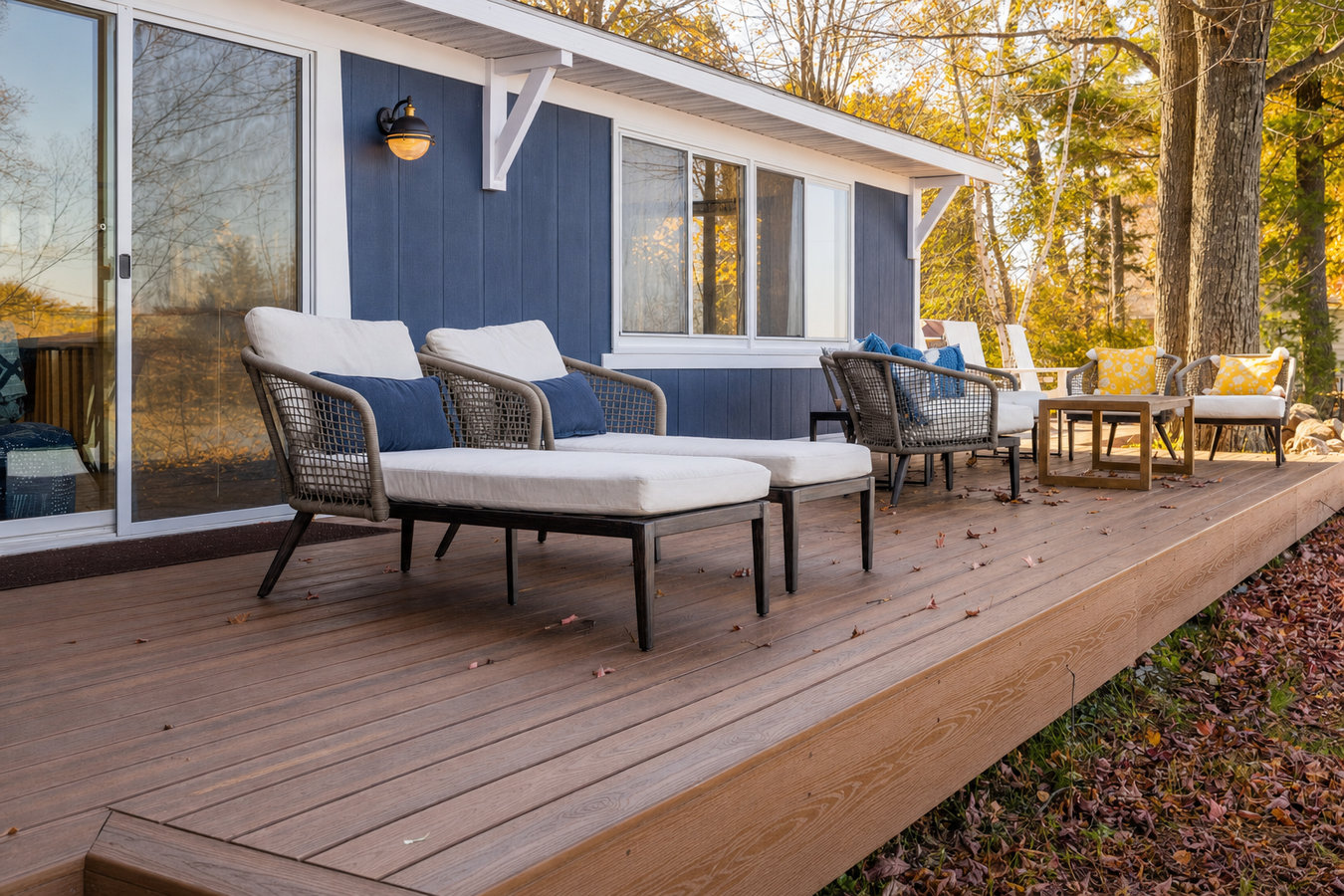
Composite deck installation in Waltham, MA starts with permits and footings and ends with finished composite boards, railings, and a city inspection - most standard-sized projects take three to seven days of active construction once materials are on site.
Composite decking is made from a blend of wood fiber and recycled plastic pressed into boards that look like wood but do not behave like it. They will not rot, splinter, or need staining. For Waltham homeowners who have owned a wood deck before, switching to composite often comes down to one thing: never wanting to spend another spring refinishing it. The material itself handles New England moisture and freeze-thaw cycling far better than untreated or even pressure-treated wood.
If you are still deciding between materials, our custom deck design and build page walks through how wood and composite compare in this climate - and what goes into the design phase before any boards go down.
If you notice soft spots, boards that flex more than they used to, or wood that is visibly gray or cracked, the structure is breaking down. In Waltham's climate, wood decks that were not maintained consistently often reach this point within 10 to 15 years. At that stage, repair costs can approach replacement costs - and composite will not have the same problems going forward.
If you have been paying to have your deck refinished every one to two years, or replacing boards regularly, the cumulative cost adds up fast. Many Waltham homeowners find that after five or six years of maintenance costs on a wood deck, the math starts to favor switching to composite - which needs almost no upkeep beyond an occasional wash.
Repeated freeze-thaw cycles are particularly hard on wood decking. If you are noticing boards that have cupped, warped, or pulled away from their fasteners after a harsh winter, that is a sign the material is not holding up to the local climate. Composite boards handle freeze-thaw cycling much better and will not absorb the moisture that causes wood to warp.
If a home inspection flagged your deck as structurally questionable or unpermitted, you may need to address it - especially if you are refinancing or selling. An unpermitted deck in Massachusetts can complicate a home sale, and some lenders will not approve financing on a home with known unpermitted structures. Replacing it with a properly permitted composite deck solves the problem and adds value at the same time.
Every composite deck installation we do includes the full scope: permit filing with Waltham's Inspectional Services Department, footing excavation to the frost line, a pressure-treated substructure built to support the deck for decades, and composite decking boards installed per manufacturer specs. We work with multiple composite product lines across price tiers - from entry-level boards that deliver solid performance to premium lines with realistic wood grain and longer fade warranties.
Homeowners who want a specific branded product can ask about Trex deck installation, which covers that product line specifically. For homeowners who want more than a standard platform, we can incorporate built-in seating, lighting channels, or coordinate a composite deck build as part of a larger custom deck design project. Every installation ends with a city inspection and a walkthrough before we hand the job over.
Suits homeowners who want the low-maintenance benefits of composite at a more accessible price point - solid performance without the premium price tag.
Best for homeowners who want a realistic wood-grain appearance, enhanced fade resistance, and a longer manufacturer warranty.
A cleaner look with no visible screws on the deck surface - a popular upgrade for homeowners who want a polished finished appearance.
Pairs composite decking with matching or complementary railing systems - low-maintenance throughout, built to Massachusetts railing code requirements.
Waltham winters are hard on wood. The freeze-thaw cycle that hits every year - temperatures above freezing during the day, dropping back below at night through November and March - is what warps boards, loosens fasteners, and eventually breaks down wood decks that were not built with moisture resistance as the primary concern. Composite handles that cycle differently. The boards do not absorb water the same way, so there is nothing to freeze, expand, and crack. That is the main reason homeowners in Waltham who have replaced a wood deck tend to go composite the second time.
Waltham's older housing stock also means a lot of homes have attachment points that need to be assessed before any new deck goes up. We have worked in neighborhoods across the city - from homes near the Watertown line to properties in Belmont - and the conditions are similar: mid-20th century framing that needs to be evaluated before a new deck load is added. We inspect the rim joist before we quote the job.
Reach out by phone or the contact form and describe your project. We reply within one business day to schedule a free site visit. No commitments required at this stage.
We visit your yard, take measurements, and walk you through composite product options that fit your budget. Your written estimate breaks out materials, labor, and permit fees separately - not a single total number.
Once you sign, we submit the permit application to Waltham's Inspectional Services Department and order materials. Permit approval typically takes one to three weeks - we handle all communication with the city.
We dig and set footings first, then build the frame and lay composite boards. A city inspector visits at key stages and again at the final sign-off. We then do a walkthrough with you and walk through deck care before we close the job.
We reply within one business day. No pressure, no obligation - just honest answers and a written quote that breaks out every line item.
(781) 701-0552Every composite deck we install is covered by a Massachusetts Construction Supervisor License - the state credential required for permitted structural work. You can verify it on the Massachusetts Division of Professional Licensure website before you sign a contract with anyone.
We set footings to the eastern Massachusetts standard - approximately 48 inches deep - on every composite deck we install. The building inspector verifies this during the framing stage. Shallow footings are the most common cause of deck failure in Waltham's climate, and we do not cut that corner.
We pull permits for every job and handle all scheduling with Waltham's Inspectional Services Department. Your deck is fully documented with the city when we are done - which matters the day you go to sell or refinance, and which protects you from liability if anything ever goes wrong.
We give you a detailed written quote that breaks out materials, labor, and permit fees before we touch anything. The number on the estimate is the number on the invoice. If scope changes, we discuss it with you before proceeding - not after the bill is written.
These credentials and practices combine to produce a composite deck that passes inspection, holds up through Waltham winters, and creates no headaches when you go to sell. The North American Deck and Railing Association (NADRA) publishes installation and safety standards for deck construction that inform our practices on every project.
Trex-specific installation covering product selection across the Trex lineup, warranty details, and what to expect from this brand in New England conditions.
Learn MoreFull design, permitting, and construction for homeowners who want a deck planned around their specific yard, lot grade, and outdoor use patterns.
Learn MoreComposite deck builders in Waltham book up fast each spring. Reach out now and we will get a site visit on the calendar before the busy season fills up.